
Tuesday, June 9, 2015
Hauntingly beautiful;Delhi and India: An 800 year long story;A jailbreak that led to the...
Hauntingly beautiful;Delhi and India: An 800 year long story;A jailbreak that led to the...: An 800 year long story;A jailbreak that led to the Kings' return Prithviraj Chauhan- the King of Delhi and Ajmer Ok folks, let m...

An 800 year long story;A jailbreak that led to the King's return
An 800 year long story;A jailbreak that led to the Kings' return
| Prithviraj Chauhan- the King of Delhi and Ajmer
Ok folks, let me admit one thing;I am not a historian, ok!I am just a teller of tales, I glean what I have heard, read or seen and then regurgitate all that in a manner that is open to all kinds of interpretation.
Delhi is often called an unfaithful bride. It has never wed any one single dynasty, figuratively speaking.What I mean to say is the Capital of India , Delhi has had several suitors and the affair with each of them lasted not more than a 100 years. !
In the 12 th century, Delhi came under the control of the Chauhans, though it is a debatable point.
It is said that King Anangpal Tomar bequeathed his kingdom of Delhi to his grandson, Prithviraj, who was then ruling Ajmer, a town in present day Rajasthan. Ajmer is a mere 100 kilometres away from Jaipur, the capital of present day Rajasthan.
For travellers coming to India, Jaipur holds an important position as a city for tourism.Ajmer, which is west of Jaipur , is the gateway to the paths of two important cities, Udaipur and Jodhpur.
Anangpal had grown old and did not have any sons.The elder son used to be the natural heir in the ancient days of Indian nobility.So, Anangpal was naturally worried about the fate of Delhi!
One day, his minister suggested to the king , why does'nt he adopt his grandson, Prithviraj and give him the responsibilities of Delhi?It was an attractive idea and Prithviraj had all the qualities to manage another kingdom.He was young, brave and ambitious, he came from the Chauhan dynasty and was of royal blood.Anangpal was a Tomar, though.
Tomars are Rajputs and trace their lineage from Lord Rama, the Hero of Ramayana and considered by millions of Indians as an incarnation of Lord Vishnu.The Chauhans, like Tomars too, trace their lineage from the same origin.
In due course, Prithviraj ascended the throne of Delhi and his grandfather retired to the forests and became a hermit.
By the close of the 12th century, India had become a favourite target for the Mongols and the Turks for invasions.The first Muslim invasion had happened in the 8th century A.D.
Delhi was ripe for another invasion now and it happened in the year 1191 AD.The aggressor was Mohammed Ghori and he was from Afghanistan. The two armies of Chauhan and Ghori met at Tarain , near Delhi and the aggressor was roundly defeated by the young Prithviraj and even captured. Ghori was later released by the large hearted Prithviraj. Ghori never digested this defeat and the next year, he again attacked India.Tarain was witness to another battle but this time, Prithviraj was defeated , captured and transported to Ghur in Afghanistan as a war prisoner. Popular legends say that at Ghur, Prithviraj was blinded by his foe and subjected to numerous insults.But, Prithviraj was endowed with a special skill that enabled him to shoot down a target on just hearing a sound from it.He need'nt see the target but the sound was enough.One fine day, the prisoner shot down an unsuspecting Ghori with his arrow , guided by the sound of Ghori's speech. To avoid a painful death, it is said that Prithviraj then stabbed himself to death.He is said to have been buried at the spot by the angry courtiers of Ghori .This event happened nearly 800 years back. Cut to 2004 A jailbreak happens in Delhi and a convict, Sher Singh Rana escapes in disguise to Afghanistan. Nothing extraordinary, except that Sher Singh was jailed on charges of killing a lawmaker or a Member of Parliament.The lawmaker was a lady and in her younger years was a bandit. She had shot to fame because she had gunned down a few Rajputs-Sher Singh was a Rajput too- angered by their torture and humiliation of her.She had served her prison term and was now a lawmaker but Sher Singh was filled with revenge. One fine day, he got his chance and the lady lawmaker fell to his bullets.Singh surrendered to the police and was imprisoned. He got his chance to escape the prison one fine day and left for Afghanistan on a mission. What followed was truly a story out of the countless fiction books! He went to Afghanistan, located the grave of Prithviraj Chauhan, exhumed the bones of the long dead king and came back to India with those remains! He wanted to give a dignified a cremation to his childhood hero, the King of Delhi and Ajmer and there was nothing that he would not do to achieve his goal. Sher Singh wanted to finish the unfinished story of 800 years! When he came back to India, he made his way to his ancestral village in the State of Uttar Pradesh and with great courtesy, gave the King a solemn cremation, as per Hindu rites. The King had returned to India after 800 years! |
Saturday, June 6, 2015
Hauntingly beautiful;Delhi and India: The unlikeliest duo;The Mughal and The Englishman
Hauntingly beautiful;Delhi and India: The unlikeliest duo;The Mughal and The Englishman: United by distance:United by Drama How would you react if you were told that one of the most refined English poets of 17th ce...
The unlikeliest duo;The Mughal and The Englishman
United by distance:United by Drama
How would you react if you were told that one of the most refined English poets of 17th century Britain wrote a moving drama on one of the most hated despots of India?Incredulous!
Both these men lived in the same period but were separated by thousands of miles and never even, communicated with each other !
We are talking about John Dryden and Aurangzeb;the former was a celebrated poet while Aurangzeb became the emperor of Mughal India after a bitter fratricidal war that left two of his brothers murdered and the third one dying of illness while escaping from India.
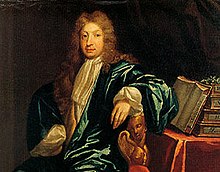
- John Dryden-Poet Laureate
Who was John Dryden?
Dryden, poet laureate, was born in Northamptonshire, Britain in the year 1630 and by his dint of talent and industry is regarded as dominating the literary life of Restoration England.Walter Scott called him Glorious John.
At age 14, Dryden was sent to Westminster School as King's Scholar.This school had been re founded by Elizabeth 1 and it was so that he was influenced heavily by all things royal and Anglicism.
After the execution of Charles 1 and the fall of monarchy, Dryden found favour with the Protectorate and got a job with one of the trusted men of Oliver Cromwell.It seems, our Poet Laureate had strong survival instincts! He worked with John Milton and after the death of Cromwell, wrote a eulogy,Heroic Stanzas.
Post the restoration of monarchy,quickly established himself as the leading poet and critic of the day and wrote a panegyric, Astraea Redux, celebrating the ascension of Charles 11 as the new king.
Dryden passed away in 1700, seven years before the demise of Aurangzeb.
When, Bernier, the doctor-traveller from University of Montpellier returned to Europe and published is travelogue of Mughal India, Dryden was much impressed and influenced from it.So, much so that, the poet wrote a drama on the tragedy of Aurangzeb.
But, my dear readers, who was Aurangzeb? He was the third youngest son of Shahjahan, the maker of Taj Mahal and Old Delhi-also known as Shahjahanabad. Shahjahan was one of the strongest Mughal emperors that India has seen.
It is indeed surprising that a poet so refined as Dryden should be writing about a coarse personality as Aurangzeb!The drama takes poetic licence and is often inaccurate in facts and circumstances.
The dramatis personae;
- Shahjahan (in love with Indamora)
- Indamora- a captive queen from Kashmir
- Aurangzeb- his younger son , in love with Indamora;the love is reciprocated from her!
- Murad- his elder son and son of Noormahal
- Noormahal- the Mughal Empress
- Arimant- Governor of Agra and in love with Indamora
- Oomrahs or Knights- Dianet, Asaf Khan, Suleyman Agha, Mir Baba etc
- Melsinda- wife of Murad.
- Zayda, favourite slave of the Empress
The drama depicts Aurangzeb as the loyal son of the Emperor and after defeating his three brothers, enters Agra and visits Shahjahan, who is 70 years old.The Emperor requests Aurangzeb to let go of Indamora but the latter refuses.The senile Emperor then invites Murad to the palace and gets Aurangzeb arrested.Agra was the Mughal capital then.
Noormahal, the mother of Murad, seduces Aurangzeb but the prisoner refuses the Empress' affections, a bowl of poison is then presented to him and just as Aurangzeb puts it to to his lips, in comes Murad ebters and snatches the cup away.
Later, the Emperor and Murad fall out of each other, the king reaches out to Aurangzeb who then defeats Murad.The vanquished prince dies of wounds and his wife, Melisinda decides to commit sati.
Noormahal goes crazy, she tries to stab Indamora but loses the plot and dies a broken person.Indamora is reunited with Aurangzeb, who then goes on to become the Emperor of Mughal India.
This is then the content of Dryden and most of it is factually incorrect.
Sati was a Hindu custom wherein a Hindu widow used to immolate herself upon the funeral pyre of her dead husband.The Mughals were Muslims and devout at that so there was no question of them following this Hindu custom.
Secondly and most importantly, Aurangzeb had killed Murad on his way to achieving his ambition and was never a loyal son of the Emperor.
There is no mention of Indamora either, in Bernier's records!
Lastly, Noormahal was the queen of Jehangir , the father of Shahjahan and not of the latter!
But, it is all poetic licence all the way for our Poet Laureate.
So impressed was the English King Charles 11, that he termed this drama as one of the best tragedies of Dryden!
Thursday, June 4, 2015
7 modern #boardgames that have links to the #past #History #India #Travel #Delhi #Heritage
Hauntingly beautiful;Delhi and India: Board Games Our Link To Our Past: Board Games-Our Links To Our Past Come summer vacation and the kids in our families pull out their board games an...
Monday, June 1, 2015
Hauntingly beautiful;Delhi and India: Tales Untold of Delhi, India, The Lord's Own Garden
Hauntingly beautiful;Delhi and India: Tales Untold of Delhi, India: The Magic of the Flute and Other Stories Tales of India, Untold ...
Hauntingly beautiful;Delhi and India: Tales Untold of Delhi, India, The Lord's Own Garden
Hauntingly beautiful;Delhi and India: Tales Untold of Delhi, India: The Magic of the Flute and Other Stories Tales of India, Untold ...
Hauntingly beautiful;Delhi and India: Tales Untold of Delhi, India
Hauntingly beautiful;Delhi and India: Tales Untold of Delhi, India: The Magic of the Flute and Other Stories Tales of India, Untold ...
Tales Untold of Delhi, India
The Magic of the Flute and Other Stories
Tales of India, Untold
What if I told you that just 110 miles from the capital of India, Delhi, is a garden that turns you into a tree if you stay back in it after dusk!
Horrified, no!
Welcome to Mathura, the city of the birthplace of Lord Krishna. He is the super hero of the world's largest epic, Mahabharata and also the author of Bhagwad Gita (Gospel of the Lord).
Millions of people the world over whether they are from the United States, Great Britain, Japan, South East Asia, continental Europe, the Middle East follow him, love him, dissect him and adore him as God, lover,philosopher or a statesman. Offcourse, his following in India knows no bounds.
Krishna was born in Mathura more than 6000 years ago on the banks of Yamuna, one of the most important rivers of the Indian subcontinent.His childhood was quite an eventful one as he had to battle the tyrant of the day, Kansa, to free his parents from their prison.
Even as a small child, his innocence attracted all and sundry to him- his flute being a magnet of sorts.
Enchanted by the lilting tunes from his flute, young maidens of his age and even older, used to sway in a manner that cannot be described in this blog. It was not a dance, it was not waltz, it was simply harmonising one's body and soul to the tunes emanating from the flute. These movements are called Raasa.
The flute is called a bansuri in North India and is made of bamboo.
So, what is this mystery about the garden that I mentioned earlier? This garden is located in Vrindavan, a quaint little place just 16 miles north of Mathura.

It is said in popular folklore that even in this day and age, there are certain days in an year when Lord Krishna along with the maidens , called gopis ,appears in the garden and then, begins a night long sequence of dances.
But, it is also said that if any outsider happens to watch this mystical dance, he/she turns into a stone or a tree! There is no conclusive proof behind this legend but it has stuck on for countless of centuries and the first thing that the travellers ask upon coming to Vrindavan is the location of this garden,
The trees that you see in the image are curious visitors ,actually-so the legend says.
The word, Vrindavan is composed of two parts- Vrinda, meaning Tulsi or Basil and Van or Forest.
Perhaps, Vrindavan in the ancient times was densely populated by basil shrubs. Basil or Tulsi in India is considered to be auspicious and spiritual in significance and almost every Indian household has a Tulsi shrub planted within it.
The name of the garden is Nidhi Van.
Why do you think this legend persists? Please write back to me.
Tomorrow's post- The City of the Djinns
Subscribe to:
Comments (Atom)