
Sunday, May 31, 2015
Hauntingly beautiful;Delhi and India: Hauntings- Echoes in Hindi Movies
Hauntingly beautiful;Delhi and India: Hauntings- Echoes in Hindi Movies: Over few days, my friends here, would be wondering why this fixation ...

Hauntings- Echoes in Hindi Movies
Hauntings-Echoes in Hindi Movies
Over the past few days, my friends here, would be wondering why this fixation with the word "haunting"?
 |
| Stepwells are haunted-they say |
I have no answers to it as to why I am so chained up to all things of the past and cherishing or romanticising the past.It is a natural past of me and will probably go up in smoke once I finish my journey on the earth.
But, I enjoy this streak of mine and suffer no guilt pangs about it.
I guess, us Indians are largely not enamoured of their past.For the millions of us, the daily challenge of keeping up the momentum of our lives overcomes the luxury of brooding over the past.
On the contrary, people from the West take great interest in most things linked to ghosts,hauntings and other weird phenomena.I get a lot of readership from such people living in the US, UK and othe western countries.
Reflections in the Hindi Cinema
Several years ago, in the early fifties, the subject of "haunting" was well captured in a Hindi movie "Mahal"The movie, that went on to become a blockbuster, did not dwell upon the subject of ghosts per se, but. drew heavily on the haunting lyrics and music of the lead number.This song was excellently rendered by Lata Mangeshkar. The lyrics went as; Aye Ga, Aye Ga , Aye Ga Aaney Wala!Translated into Hindi, it means, "The one I am pining for will come one day!"
https://www.youtube.com/watch?v=PceIRa17vwI
The lead female protagonist was Madhubala, that great ethereal beauty who sprung a million desires in the hearts of the average Hindi cinema goer, recovering from the miseries and angst of Partition of India. Mahal was produced in the year 1949.
What made this movie so much an ethereally haunting film?
First, the screenplay that captured the elusive character of the heroine so subtly.One moment, she is here, the next moment she is gone-vanished!
Two, the bewildered and harried role that Ashok Kumar played - his arched eyebrows effectively conveyed his sense of bewilderment and at times.horror on seeing images in the least unexpected places and at unexpected times.
And three, of course, the timeless music composed by Ghulam Mohammed and the great lyrics of the song.Was it Shakeel Badayuni?
Since, then, there have been a slew of movies on ghosts and hauntings in the Hindi cinema like Bees Saal Bad and Madhumati.I have yet to see these two epochal movies.
Touching upon this subject, again, in the early eighties-I think it was 1980, there was this greatly successful movie, Jalmahal starring Jeetendra-often called Jumping Jack - and Rekha.
The movie set in the ancient palace of Amer, Jaipur was a modern day adaptation of Mahal, except that this time the music composer was RD Burman. Oh man, what a great composition it was the song- Main Hoon Diya, Sooni Raat Ka.(I am the lamp that glows in a forlorn night!).
The combination of the haunting song with images of the abandoned fort lent an element of authenticity to the entire story, which otherwise was about afterlife!
https://www.youtube.com/watch?v=UYh19dgVokM
Finding Inspiration from abandoned historical sites
Scattered throughout India are some very well known places,forts and palaces that convey that sense of eeriness and foreboding.These sites have become a part of the Hindi movie stories.
Take the case of Bhangarh fort in Alwar, India or the Garh Kundar near Orchha, Jhansi.At Kundar, a bloody battle between two warring Rajput clans led to the annihilation of one of them in one single night!Today, not even the pigeons make the castle their homes.
Bhangarh, a few hundred kilometres from Delhi is reputed to be a cursed fort where one finds unsettling to enter even during the daytimes.
And, of course, right in the middle of Delhi, you have an ancient fort that is inhabited by djinns or ghosts and are revered by the believers.
More on the haunting side of India and Delhi in the days to come.
Stay tuned!
Saturday, May 30, 2015
Hauntingly beautiful;Delhi and India: The Mowgli Story
Hauntingly beautiful;Delhi and India: The Mowgli Story: Was there a Mowgli at all? We all have grown up listening to and reading Rudyard Kipling's tales o...
Friday, May 29, 2015
Hauntingly beautiful;Delhi and India: The Hauntingly Beautiful Stepwells of Delhi
Hauntingly beautiful;Delhi and India: The Hauntingly Beautiful Stepwells of Delhi: The Water Cafes of Ancient Delhi Delhi has had a unique distinction of hosting a wide variety of architecture down the ...
The Hauntingly Beautiful Stepwells of Delhi
The Water Cafes of Ancient Delhi
Delhi has had a unique distinction of hosting a wide variety of architecture down the ages.Be it Jain,Buddhist, Turk, Moghul or British, Delhi is like a mother hen-under her loving gaze and protection thrive all kinds of architecture styles.
How many of us know that Delhi has had more than 300 baolis or water cafes.
A baoli is a stepwell, the steps used to lead to a pool of water-the water of which was drawn from an adjacent well or through aquifers within the subterranean soil and rock.Baolis also were a place were the lay people could congregate and exchange notes-hence the term "water cafe"
The earliest step well in Delhi and probabbly the whole of Northern India is the Anangtal, located in the northern part of Mehrauli.
It is said that the queens pf Raja Anangpal Tomar used to give away alms at this place to the poor at the insistence of the king.
Some people say that ghosts are said to live around these stepwells but of course, all this is hearsay.
The Tomars gave way to the Chauhans , who in turn yielded to the Mamluks or the "Slave Dynasty".
The Gandhak ki Baoli is adduced to this period of late 12th century and much of its construction is similar to Anangpal ki Baoli.Gandhak means sulfur and it is believed that the waters of this baoli had sulfurous content and hence healthy.However, as you can see, this place needs renovation.
The architecture of the baolis underwent a major change in the 16th century when a Lodi dynasty noble, Daulat Khan Lodi constructed the Rajon ki Baoli.Supposedly, this stepwell was meant for the convenience of the masons of that time.Notice the arches of this stepwell-they are a bit conical and taper toward the top.
Another interesting baoli of the 16th century is found in the Central Delhi area-Agarsen Ki Baoli.Legend has it that this stepwell was constructed during the Mahabharat era i.e. more than 5000 years ago.However,the trader community of India restored this building only a few hundred years ago and borrowed significantly from the contemporary architectural style.
Agarsen ki Baoli is quite popular among the Hindi movie industry and quite a few creative visualizations have been shot here.Thanks to this,this place has started attracting the young traveller crowd which is good for the India's heritage conservation efforts.For the not so well informed, Agarsen refers to an ancient king of Mathura who was later imprisoned by his son in law who also wanted to be the king.
In the late 14th century or so, a Sultan, Feoze Shah Tughlaq dug up another baoli.This stepwell is located within the Feroze Shah Kotla which is a citadel on one of the prominent roads of Delhi.Circular in nature, this baoli is in a very bad shape and has been locked up by the authorities.
Another interesting baoli can be visited in the Red Fort at Delhi.It is said that this baoli was constructed by the Tughlaq dynasty-which preceded the maker of Red Fort by a good 300 years.Probably the source of the water is the river Yamuna, whch used to flow quite nearby.
The images of the baolis are from the most ancient to the most recent in description.
 |
| Red Fort Baoli |
 |
| Firoz Shah Baoli |
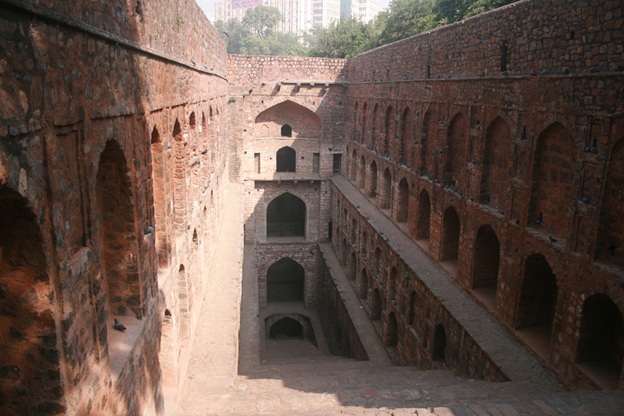 |
| Agrasen Ki Baoli |
 |
| Rajon Ki Baoli |
| Anangtal |
 |
| Gandhak Ki Baoli |
Haunting Stories;Delhi and India: The King and the Ambassador-Taunts,Insults and Bar...
Haunting Stories;Delhi and India: The King and the Ambassador-Taunts,Insults and Bar...: The Mughal and the Persian- barbs back and forth! India, for much of the 13th-18th century period was under the Slaves, Turks,...
The King and the Ambassador-Taunts,Insults and Barbs
The Mughal and the Persian- barbs back and forth!
India, for much of the 13th-18th century period was under the Slaves, Turks,Afghans and later on,the celebrated Mughals.
In 1526, Babur, a a descendant of Ghenghis Khan and Tamerlame or Timur, descended upon the Indian plains from his perch in Central Asia and fought a pitched battle with Ibrahim Lodi, the then king of Delhi at Panipat, India. Lodi was an Afghan king.
Panipat is located a few hundred kilometres from Delhi and has seen at least 3 major battles for the Delhi throne.Close to Panipat is located Kurukshetra, the site of the Great War or Mahabharat.
The Great War was fought amongst the two warring sets of cousins, the Pandavas and the Kauravas.
For some reason, this area is haunted and armies have fought among themselves, murdering in thousands, for that throne of Delhi.
So, after worsting Lodi and later killing him, Babur marched to Delhi and the unfaithful bride that Delhi is, wed him as her lord.
Babur was the founder of the Mughal empire in India and his descendants were Humayun, Akbar,Jehangir and later Shahjehan.
We will talk about Shahjehan, the king who is credited with building Taj Mahal in Agra though there are several controversies about this claim. He laso built the Delhi Red Fort and the old Delhi city.
While the Moghuls were cementing their kingdom in India, the Persians or the Iranians were watching the Mughal's moves were great interest.Afghanistan was their area of interest and quite a number of times the two dynasties conflicted over the control of the Afghans.The bitterness was all evident.
The Persian ambassador to the Moghul court carried this bitterness and the attendant sense of superiority in his heart.After all, the Persians considered themselves to be of a more royal blood and carrying the strains of the ancient kings like Darius, Xerxes and Cyrus!
The Mughals considered matrimonial relations with the Persians a matter of honor and racially uplifting.Many princes had Persian wives and it was considered de rigor off springs of these ladies would later become the king of India.
The Mughal king, Shahjehan, on the other hand treated the ambassador with disdain and was determined to show the envoy his place in the court!
One day, the Mughal plotted to inflict embarrassment on the envoy by having a canopy erected in such a manner that the latter had to bow his head while entering the court of the Mughal. No way, the envoy said to himself and proceeded to enter the room with his back turned toward the king!
Shahjehan was incensed..O fool, he thundered, are you an ass that you are entering this august assembly in this manner?The ambassador answered coolly, O King, in our country, we enter the asses' stables in this manner only!The entire assembly was stunned but the king could not do anything.Persia was much much militarily stronger than the Mughal empire.
The insults and barbs continued.
After Shahjehan completed the construction of Shajehanabad-now known as Old Delhi- he invited the envoy for a tour of the city and asked for his opinion.
After travelling together for a few miles in the Delhi streets and a boat ride together in the Yamuna, the king requested the envoy for his opinion.
The ambassador, without batting an eyelid remarked-O King, while Delhi is like a moon on the fourteenth night, my capital is like a new moon night!The king was mightily pleased with this remark.
But, a few discerning courtiers saw through this remark.The ambassador was really hinting that the Mughal empire was actually disintegrating while the Persian empire was still in its infancy and on path to glory!
The Mughal-Persian relations were not that pleasant during this phase of the Mughal rule.
There are other instances of the unpleasant exchange of barbs between the two personalities, but for brevity, I shall stop here.
Thursday, May 28, 2015
Haunting Stories;Delhi and India: Triumph of Spirit-Our own Blade Runner
Haunting Stories;Delhi and India: Triumph of Spirit-Our own Blade Runner: Today morning, when I opened my inbox, I saw a notification sticking out. I have got mail, I chuckled to myself. Not surprising beca...
Wednesday, May 27, 2015
Haunting Stories;Delhi and India: Triumph of Spirit-Our own Blade Runner
Haunting Stories;Delhi and India: Triumph of Spirit-Our own Blade Runner: Today morning, when I opened my inbox, I saw a notification sticking out. I have got mail, I chuckled to myself. Not surprising beca...
Triumph of Spirit-Our own Blade Runner
Today morning, when I opened my inbox, I saw a notification sticking out.
I have got mail, I chuckled to myself.
Not surprising because one gets scores of messages every day in your Gmail or Yahoo account.
But, this one was special- someone had responded to one of my latest blog posts and this someone is one who greatly admire. He is probably reading this post so shall be chuckling ear to ear.
Why do I admire Mr X?
Years ago, while I was growing up and studying in School, Mr X was one of the fittest guys around. And also a happy soul. He was good at studies and every one thought he would join an engineering course. You see, every one is marked by every other boy or girl in the class , career wise.
Boards came. We wrote our tests. And then we all entered our own Colleges for Life.
We all went our own ways, struggling with our jobs and careers, married and begot children and started our own families.
The year was 2008 when I visited Lucknow , my own city, for a short break. Luckily, I had the number of X which I had got from another school friend of mine.
I found X the same cheerful man I had known during school days. The same happy disposition and the same warm smile that reached the corners of his eyes.
He had turned a tutor and a very successful one at that. We shared our pleasant memories and then I left.
Back in Delhi, over a nice snack and some really nice tea, I shared this meeting with another friend of mine.
"Do you know", he wheezed," what happened to X?" "No", I intoned.
Well, he suffered from muscular dystrophy soon after the Board exams, my Delhi friend carried on. And this disease put paid to his becoming a career Army officer. But, too proud to share with the world his tragedy, X fought back and made his passion his career. He became a successful tutor.
I have a name for our X here- Our Very Own Blade Runner!
Haunting Stories;Delhi and India: Tales of The Hunt;Mughals on the rampage
Haunting Stories;Delhi and India: Tales of The Hunt;Mughals on the rampage: Tales of The Lion Hunt-Mughals on the rampage For the readers of my blog, my latest offering- the art and science of lion hunts i...
Tales of The Hunt;Mughals on the rampage
Tales of The Lion Hunt-Mughals on the rampage
For the readers of my blog, my latest offering- the art and science of lion hunts in India...read on...
The Indian lion is featured in the state emblem of India. Majestic in size and poise, the animal once roamed large tracts of India.
Today, the actual numbers are just a ghost of the their former size of numbers.The western state of Gujarat, India is today the only reserve of this animal which competes , in every department, with its near cousin, the Bengal tiger.
For nearly 200 years, India was ruled by the Mughals who owed their lineage to Ghenghis Khan and Tamerlame.
Ghenghis is considered one of the foremost emperors of the world-his empire ranging from China in the east to the Russian plains in the west. Tamer Lame was distinguished by his murderous mobs who brought death and deprivation to every country they visited.
Needless to say, this thirst for blood manifested in their descendants, the Mughals who ruled India from Delhi and Agra for a long period of time.
In my last blogpost, I have written about their blood thirsty ways to attain power, how an aspiring king did away his brothers in his quest for power.
Now, when these guys were not fighting amongst themselves, they were hunting the wild animals.This hunt was called shikar.

It was quite an elaborate effort to hunt down these beasts-particularly the lions.
The men in the shikar party used to tie up an ass or a donkey near the cave of the lion .The animal seeing a hapless dinner available to it did not let the opportunity pass.After the dinner, it used to go to the nearest lake or a river, quench its thirst and come back to its cave.
The next day- one more free meal for the lion.Again, the lucky beast quenched its thirst and go back to its siesta.
But, there was a catch, the donkey was fed with opium, like hashish,to invade the systems of its diner.
The lion, now sufficiently overcome with laziness was too weak to even spot the lurking danger in the form of the Mughal emperor hidden on a wooden platform near its cave.
Out came the spears and bows and arrows and the lion was massacred in cold blood.
Seems heroic? No. But, this kind of hunts , over the years, robbed India of her wildlife and today, the kingdom of the lion is restricted to just a colony in an Indian state.
Monday, May 25, 2015
Haunting Stories;Delhi and India: The Mysterious Affairs of Salimgarh
Haunting Stories;Delhi and India: The Mysterious Affairs of Salimgarh: Brace up son,the assassins have arrived! Delhi, often called as the unfaithful bride of India, has a multitude of secr...
The Mysterious Affairs of Salimgarh
Brace up son,the assassins have arrived!
Delhi, often called as the unfaithful bride of India, has had a multitude of secrets tucked away in her bosom.
The colourful and morbid past of the city draws visitors to the city in droves, some come here to soak in the modernity of this ancient town and the rest head to Delhi to explore and relive its ancient and ghostly past.
Delhi as a city never ceases to enchant me.William Dalrymple has called it City of Djinns.
Djinns are ghosts by another name.
As you enter the gates of Red Fort of Delhi, you cannot but fail to appreciate the vastness of the fort and its walls.The Red Fort was built by Shah Jehan, the famous Mughal who also built the worl renowned Taj Mahal in Agra, India.
Most of the travellers are ignorant of another fort, Salimgarh,located just north of the Fort.A narrow bridge connects the Red Fort and Salimgarh.
 |
| Salimgarh- pic courtesy from the web |
300 years back, Salimgarh was the imperial dungeon, meaning the royal prison.
Disobedient princes and princesses were thrown into the prison and at times, executed.
The affair of Dara and Aurangzeb
The year was 1659 and the sons of Shahjehan were embroiled ina deathly contest for the crown of the Mughal empire in India.
The King had 4 sons; Dara, Murad,Aurangzeb and Shuja. Aurangzeb had disposed off Murad and Shuja was on a run from Bengal to the borders of Myanmar (earlier Burma) .The only prince that was left apart from Aurangzeb was Dara and after a long chase, the latter was captured by Aurangzeb and was put in the Salimgarh dungeon.
Dara had for company his minor son, Sipar Shukoh in the prison. The prince was quite popular among the citizens of Delhi and unlike many of the Muslims of that era was quite liberal in his approach toward life and polity.But, he was a stupid and haughty guy.He did not take kindly to the advice offered by his friends whom he treated with contempt.
In the famous Battle of Samugarh near Agra, India, though Dara had an army of around 400,000, against Aurangzeb's 35-40,000, he could not hold on to the ground and ultimately lost the battle.
Aurangzeb was too clever to be a direct instrument for Dara's execution.He wanted a handyman and he found one.
Years ago, Dara had offended a small time official called Nazir.That offence was rankling Nazir for sometime and Aurangzeb finally used that grudge.He sent Nazir to assassinate his brother.
One night ,after Dara and his young son had had their dinner, he heard a small commotion at the prison doors.
Sensing his end was near, the unfortunate prince grabbed his son to his bosom not intending to let the child be taken away.But, the brutes were many and they wrung away the wailing child to an adjoining room.
There was a brief struggle. Dara was a strong man and he had commanded armies during his hey days and he could not be so easily subdued.The attackers were determined, blinded with the hate and the lure of lucre.They pinned the unfortunate prince to the ground , Nazir fished out a shimmering blade and the prince was done away to death.
Salimgarh has been witness to several such incidents.Locals say that the fort is haunted by unhappy and dissatisfied souls- one of whose also happens to be that Aurangzeb's daughter!
Haunting Stories;Delhi and India: Tiger Tales- The Jungle, Mowgli and Mohan
Haunting Stories;Delhi and India: Tiger Tales- The Jungle, Mowgli and Mohan: I live in Delhi, one of the ancient cities of not just India but of the rest of the world as well so, a lot of my posts reflect his...
TheGhostFromDelhi: Tiger Tales- The Jungle, Mowgli and Mohan
TheGhostFromDelhi: Tiger Tales- The Jungle, Mowgli and Mohan: I live in Delhi, one of the ancient cities of not just India but of the rest of the world as well so, a lot of my posts reflect his...
Sunday, May 24, 2015
TheGhostFromDelhi: Tiger Tales- The Jungle, Mowgli and Mohan
TheGhostFromDelhi: Tiger Tales- The Jungle, Mowgli and Mohan: I live in Delhi, one of the ancient cities of not just India but of the rest of the world as well so, a lot of my posts reflect his...
: Piku- Irrfan steals the show
TheGhostFromDelhi: TheGhostFromDelhi: Piku- Irrfan steals the show in...: TheGhostFromDelhi: Piku- Irrfan steals the show in this Indian movie : Piku is all about Irrfan I am co...
Was there a real Mowgli?
TheGhostFromDelhi: The Mowgli Story: Was there a Mowgli at all? We all have grown up listening to and reading Rudyard Kipling's tales o...
The Mowgli Story
Was there a Mowgli at all?
We all have grown up listening to and reading Rudyard Kipling's tales of Mowgli, the jungle boy reared by the wolves.Mowgli lived somewhere in the forests of India, apparently and many of the characters of Kipling's work have Indian names- Baloo, Sher Khan etc.
This is a continuation of my earlier post on India's wildlife , her jungles and the fantastic tales of her wildlife.
Was there a real Mowgli?
Years ago, while working with a newspaper in Kanpur, India, I read a fantastic account of Mowgli and his tales.
During the British Raj, when India was Britain's colony, hunts of Indian wild animals were a common affair- it is estimated that the British officers and the Indian Rajas together gunned down more than 100, 000 tigers!
Today, there are no more than 3000 tigers in Indian jungles, alas!
Britain, through East India Company had colonised India in the 18th century
During one such hunt, the hunters , in a remote Indian jungle, stumbled upon a pack of wild dogs.
Wild dogs are some of the most tenacious hunters in the jungle and can even fell full grown adult tiger!
The hunters were however not much prepared for an even more astonishing sight- crouched amongst the pack was a small boy, a human boy, that gave out sounds like a feline- whistling, roaring and even gnashing his teeth.
After a small chase, the hunters managed to separate the small boy from the pack and carried him back to their camp.
They then tried to speak with him in a language spoken locally hoping the boy would respond but, he exhibited no signs of comprehension, let alone answering back to the assembled men.
Confounded and disappointed, the men then decided to refer the boy to a doctor.Obviously, the doctor too could not get to the root of the problem.
Ultimately, the local police decided to put the small boy in a sanatorium in Agra for psychiatric treatment.This sanatorium was located in Sikandra, Agra and was just in front of the tomb of Akbar, the Moghul emperor.
The mentally disjointed boy could not cope up with his new surroundings and passed away sometime in the late 19th century.
What we read in the Junglebook today has largely been inspired by this story.Except that there are no wolves in India.
A fantastic tale, is'nt it?
TheGhostFromDelhi: Piku- Irrfan steals the show in this Indian movie
TheGhostFromDelhi: Piku- Irrfan steals the show in this Indian movie: Piku is all about Irrfan I am committing blasphemy even as I am writing this, so save me God! ...
Piku- Irrfan steals the show in this Indian movie
Piku is all about Irrfan
I am committing blasphemy even as I am writing this, so save me God!

Piku , a Hindi movie released only last Friday is more about Irrfan than Amitabh Bachchan, Dipika Padukone or any other actor.
Hindi movie watchers say that it took Amitabh more than 10 years to attain stardom.For Irrfan, it just took two and a half hours to replace the veteran from his pedestal.
I know I am making a sweeping statement but, that is the average assessment of the random movie goers that I spoke with, last Friday,in the Janakpuri, Delhi, cineplex.
Irrfan is simply fabulous- with a a slight arching of the eyebrow he can convey emotions and ideas that normally a beefy superstar finds it difficult to.
I am not a normal movie reviewer, but, last evening after a small chat with a fellow blogger , I decided to venture into this activity.
The best actors in Hindi cinema come from the NSD or the Indian Film Institute, the superstars come in their Lamborghinis or Ferraris.Irrfaan is the best actor around but he won't become a superstar.NSD is a theatre training school run by the government of India.
Piku essentially is a movie reflecting the changing attitudes and sensibilities in the Bengali community.The protagonist(Dipika) is around 30 years old, single,surprisingly svelte and has a very sexually active life.She is surprisingly svelte because you don't have a fantastic body even at 30!
Piku is devoted to her dad and Dad Amitabh has famously essayed a role of a cantankerous, miserly Bengali elder.He is constantly fidgety about his bowel movements which is really the hook or the anchor of the movie.
Irrfan, a travel entrepreneur, brings a fresh whiff of air to this otherwise constipopulous (copyright mine) drama with his one liners and loaded twitch-of-the-eye stuff.
I have been watching movies for a good 30 years for now,and this is the second time I have seen Amitabh dying in a movie-the first one being the immensely successful blockbuster Sholay.
Dipika sparkles but her Hindi dialogues betray her struggles with the language.
I would rate Piku an excellent Hindi movie and hope it sweeps the sundry movie awards next year.
Well done Piku, Irrfan, Amitabh and Shoojit Sarkar!
Pic credit- Web
Friday, May 22, 2015
TheGhostFromDelhi: In a deadend
TheGhostFromDelhi: In a deadend: I guess I have hit a roadblock I have nothing to write today, it seems. After writing furiously in the past seven days, my th...
Thursday, May 21, 2015
From Indraprastha to Purana Qila- a walk through time: In a deadend
From Indraprastha to Purana Qila- a walk through time: In a deadend: I guess I have hit a roadblock I have nothing to write today, it seems. After writing furiously in the past se...
In a deadend
I guess I have hit a roadblock
I have nothing to write today, it seems.
After writing furiously in the past seven days, my thought process has gone into a tail spin.It is 11 pm in Delhi, India and I am in a daze.
What do they say?Writer's block...yes, that is what seems to have hit me.
But, the urge to write something for my friends who follow me is over powering.Maybe, I shall get a nudge, a sense of direction from them.
Have I become too opinionated ?Which is what is showing up in my writings?Why do I have to think on subjects for my blog?It should all come out spontaneously.No?
Why bother people with my perceptions and opinions ? Does it matter?
But, then the urge...ohhh?
I never have penned down my thoughts, my deepest emotions, so, does this roadblock give me an opportunity to bare my soul?
I don't know but, writers are known to display their softer selves at times.You are a human and you can't help continue being a human.
But, years of struggle for the daily morsel have erected walls of impersonality around my self.So difficult to scale them up!
!

Wednesday, May 20, 2015
From Indraprastha to Purana Qila- a walk through time: Tiger Tales- The Jungle, Mowgli and Mohan
From Indraprastha to Purana Qila- a walk through time: Tiger Tales- The Jungle, Mowgli and Mohan: I live in Delhi, one of the ancient cities of not just India but of the rest of the world as well so, a lot of my posts reflect his...
Tiger Tales- The Jungle, Mowgli and Mohan
I live in Delhi, one of the ancient cities of not just India but of the rest of the world as well so, a lot of my posts reflect history.
Today, I shall put in a little bit of something that is more representative of India, India's wildlife.Today I will write about tigers, our jungles and Mowgli.
I live not very far from a place called Bagdola.Old people of the village say that nearly a 100 years ago, Bagdola was home to tigers."Bag " means tiger and "dola" means "wandering" so, Bagdola was a place where tigers used to roam around.
Scary, is'nt it?
What if I told you that there is a famous story of one of the most famous tigresses, Machchli, having killed a 14 feet long crocodile in a much publicly watched event.

Machhli lived in a forest in Rajasthan and was so named because of a fish shaped mark over her left eye.All tigers have some unique characteristics and this one also had one.
This forest is called Ranthambore National Park and is home to numerous tigers, leopards , bears and other forms of wild life.
Machhli was quite a ferocious and muscular tiger and she definitely made her presence felt..One snarl of hers was enough to send prospective boyfriends scurrying for cover in the tall grasses of the forest.
Machhli passed on the baton to her daughter, Sundari (T-17) in the best traditions of the jungle. Sundari, also named Satra ( Seventeen) soon surpassed her mother in power and dominance of the jungle.Machhli had to relinquish a part of her kingdom to her daughter after the mother lost a duel.Such are the ways of the jungle.
One of her daughters was appropriately named Dollar. Sundari remained a family person, visiting her folks periodically and checking everything was alright!
The Man Eater of Kumaon
In the beginning of the 20 th century, the northern state of India, Uttar Pradesh , was wracked by a series of attacks on humans by a lone tiger.The area that witnessed these attacks is called Kumaon.
The villain of the piece was called The Bachelor . It is said the bachelor had not just attacked but even killed and eaten dozens of humans. The said tiger was gunned down by India's ace wild life hunter Jim Corbett.
The hunting down of The Bachelor was later documented in a very interesting and much publicised book, The Man Eaters of Kumaon.
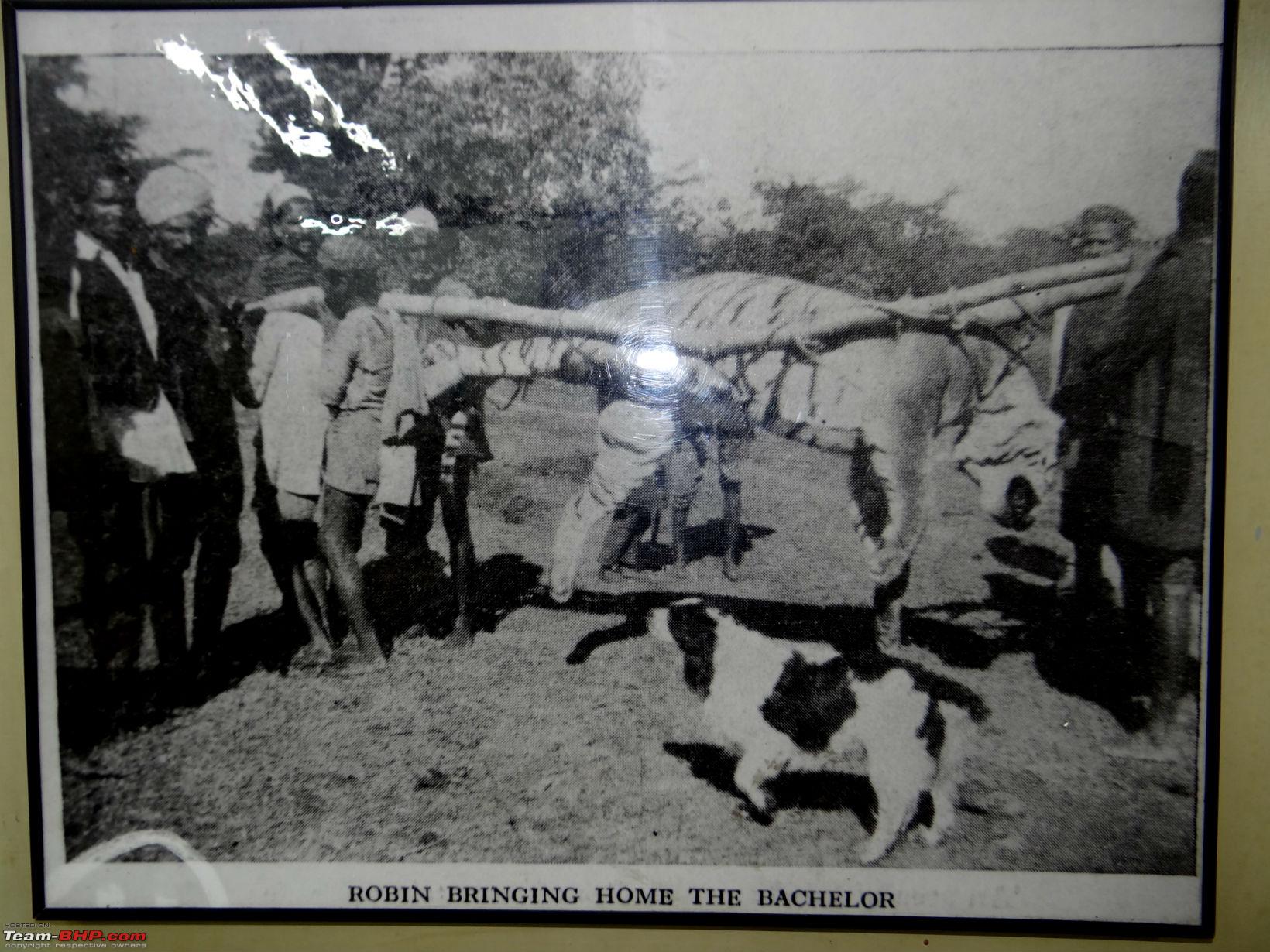
Today the forest is now a protected area for tigers and is called Corbett National Park.One of my friends, Aditya Amar runs a summer cottage for travellers called Cottage Nirvana.You can access the link at; https://www.facebook.com/photo.php?fbid=10205988640182337&set=a.1270461688896.2041563.1450495076&type=1&theater¬if_t=like
(Tomorrow- Mowgli and the White Tiger)
Visit my Facebook Page and hit the Like button; https://www.facebook.com/groups/182276148583993/
Tuesday, May 19, 2015
The Warrior and Artist- Maharana Pratap
Wielding spears and paintbrushes-Rana Pratap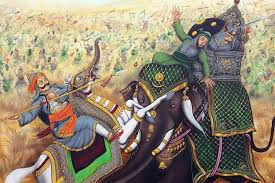
Whatever we know of this great warrior is largely limited to his military exploits against the then Mughal emperor Akbar and the famous Battle of Haldighati. This battle was fought in the year of 1576 AD and was a defining moment for not just the small kingdom of Mewar but also how the later Hindu kings fought battles with the Mughals.About that, we will read later.
Pratap ascended the Rajput kingdom of Mewar in 1572 after the demise of his father Uday Singh, the creator of Udaipur.
Uday Singh had married several times and had several claimants for his throne. Kings used to marry into several households to sement political and military relationships and it was a sommon practice at that time.
Pratap was his eldest son but had little interest in the throne and according to unconfirmed reports , was planning to leave the kingdom and settle elsewhere.
Uday Singh passed away on Holi and some serving nobles wanted to place Jagmal- another of Uday's sons- on the throne.They even convinced him to come and sit on the throne.However, a large section of the Rajput chiefs felt that Pratap was the natural and deserving choice.So, Pratap was ultimately elected the unanimous choice and Jagmal was shown the door.
When Pratap assumed office, he had hardly any territories.The Mughals had already occupied the ancient fortress of Chittor and most of Mewar. The kingdom had hardly any territories and resources.
It was in this backdrop that the famous pitched battle of Haldighati was fought between the Mughal forces and the Rajputs.
Clearly, the latter were outnumbered and they lost heavily- around 20,000 Rajputs and Bhils lost their lives.For the Mughals, it was a pyrrhic victory and for the next 4 years, the Mughals had to bear heavy losses in their expeditions in Mewar.
For Pratap, Haldighati taught an important lesson to him- field wars were a drain on the resources and it made better sense to resort to guerilla tactics. So, for the next 4 years, he and his highly motivated force engaged the Mughals in a never ending cat and mouse game that led the latter to a state of demotivation and tiredness.
For Akbar, expeditions to Mewar were a zero sum game and the clever man that he was, abandoned his pursuit of his rival- Pratap.
Ragmala- Where ragas melt into colors and moods
The next few years from 1580 to the year of Pratap's death in 1597 were of peace and he used this period to patronize and cultivate art and craft and paintings, chief among them was the Ragmala series of paintings.
The actual credit for this school of paintings goes to Nisardi, a painter who migrated to Mewar from Malwa. A fellow painter, Mohammed should also not be forgotten for this golden era of paintings.
Ragmala was also being patronised in the Mughal and Amber courts but was adapted to the Mewar style and tastes by the Mewari painters.
So, what does Ragmala mean?The paintings in Ragmala simply represent each raga or ragini with colour, mood, hero or heroine as well as the time of the day or night when that raga is used in musical renditions.
I am not an art or music specialist, but the main idea behind this post was to bring out the legacy of Pratap in not just matters military but also art and craft.
I hope , you will like this post.
Monday, May 18, 2015
Buddha and Pratap- Two revolutionaries in World History
Gautam Buddha and Maharana Pratap- The two heroes of World and Indian History
May is a special month for Indian history. May, of course, is also one of the hottest months of the Indian subcontinent but for now, we will focus just on history and not geography.
It is in May that two of India's two greatest leaders-one philosophical and the other a military/political leader- were born.
 We all know about Gautam Buddha but, outside India, not many people know about Maharana Pratap.
But, first we will understand the legacy and heritage of Gautam Buddha.
The fundamental difference that Buddha made for the millions of Indians was this- he espoused the philosophy of renunciation.
He was born in a royal family and was the heir apparent of the Shakya kingdom but, the sufferings of his subjects made him tleave the worldly trappings and go discover the sublime truth.
He is known for Ahimsa-non violence- which encouraged people to desist from slaughtering mute birds and animals in sacrifices and other rituals.
That a member of the royal family choosing to leave a life of luxury and propagating ahimsa and nirvana, made a significant impact on the minds of the common Indians.After all, how many, princes could forsake their wordly comforts?And, Siddhartha, the prince here, belonged to a family that traced its lineage to the dynasty of Rama, the legendary king of Ayodhya and hero for the countless masses of Indians?
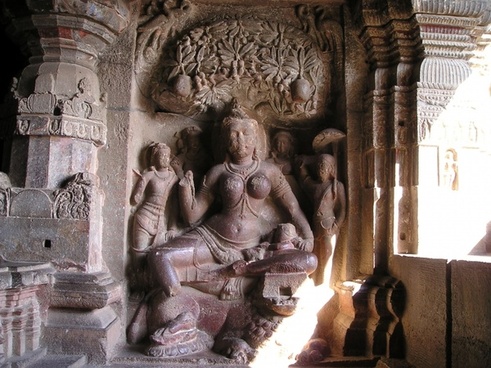
Perhaps , the early traction for Gautam's views got speed from his lineage.The depth of his philosophy was understood later.
It is believed that Gautam tried to simplify philosophy without going into semantics and metaphysics that makes the subject so boring. In that endeavour, he broke free from the orthodoxy of the scriptures and mindless rituals that were the order of the day.
However, when we look at his legacy objectively, there are two things that harmed India in the long run.
One, his emphasis on ahimsa, led subsequent rulers like the latter Mauryas to shy away from crossing India's borders and pre empt the foreign invasions. Ahimsa requires us to not hurt any living being, the kings used to argue.
Of course, this led to an increased vulnerability of Indis' borders to the various attacks of Huns, Sakas and later, Turks and Mongols.
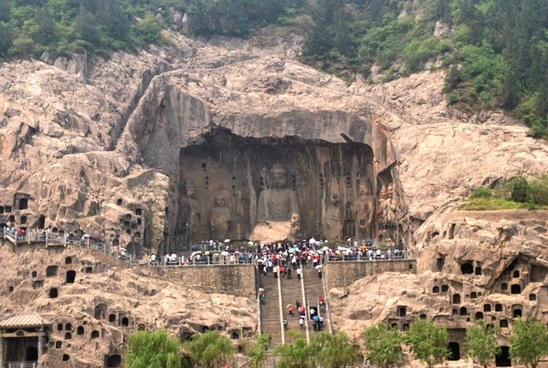 |
| Rock Cut Images of Gautam Buddha |
The last ruler of the Mauryan dynasty , Brihadratha,was assasinated by Pushyamitra Sunga , his army general , who strongly felt that Buddha's teachings were being wrongly interpreted by the monks and the kings.
 |
| Pushyamitra Sunga |
The second legacy of Buddha that was wrongly construed by the ordinary Indians was the practice of renunciation. Ordinary folks got the cue that it was perfectly ok for them to go to the woods and jungles and leave their families home.After all, Buddha too had done it, is'nt it? And it was difficult for the monks and the kings to justify Buddha's actions.
But, in the ultimate analysis, the philosophy of Buddha was so much compelling to follow that even after 2500 years, the man is still debated upon, revered, followed and looked after as a pole star.
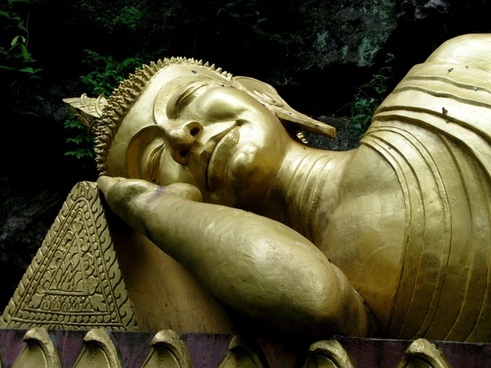
But, there are a few questions which baffle me;
Why did Buddhism find favour with more Indians than Jainism? After all, Mahavira was the contemporary of Gautam?
Secondly, a large number of Jains also being Gujaratis and Gujaratis also being traders, what stopped Jainism from being exported abroad as Buddhism?
If you have answers to these, please let me know.
I am available at swayamt@ gmail.com
In my next post, I shall write about another prince of India that made a fundamental difference to our history- Maharana Pratap.
| Maharana Pratap |
Images credits; Web
Subscribe to:
Comments (Atom)