
Tuesday, June 9, 2015
Hauntingly beautiful;Delhi and India: An 800 year long story;A jailbreak that led to the...
Hauntingly beautiful;Delhi and India: An 800 year long story;A jailbreak that led to the...: An 800 year long story;A jailbreak that led to the Kings' return Prithviraj Chauhan- the King of Delhi and Ajmer Ok folks, let m...

An 800 year long story;A jailbreak that led to the King's return
An 800 year long story;A jailbreak that led to the Kings' return
| Prithviraj Chauhan- the King of Delhi and Ajmer
Ok folks, let me admit one thing;I am not a historian, ok!I am just a teller of tales, I glean what I have heard, read or seen and then regurgitate all that in a manner that is open to all kinds of interpretation.
Delhi is often called an unfaithful bride. It has never wed any one single dynasty, figuratively speaking.What I mean to say is the Capital of India , Delhi has had several suitors and the affair with each of them lasted not more than a 100 years. !
In the 12 th century, Delhi came under the control of the Chauhans, though it is a debatable point.
It is said that King Anangpal Tomar bequeathed his kingdom of Delhi to his grandson, Prithviraj, who was then ruling Ajmer, a town in present day Rajasthan. Ajmer is a mere 100 kilometres away from Jaipur, the capital of present day Rajasthan.
For travellers coming to India, Jaipur holds an important position as a city for tourism.Ajmer, which is west of Jaipur , is the gateway to the paths of two important cities, Udaipur and Jodhpur.
Anangpal had grown old and did not have any sons.The elder son used to be the natural heir in the ancient days of Indian nobility.So, Anangpal was naturally worried about the fate of Delhi!
One day, his minister suggested to the king , why does'nt he adopt his grandson, Prithviraj and give him the responsibilities of Delhi?It was an attractive idea and Prithviraj had all the qualities to manage another kingdom.He was young, brave and ambitious, he came from the Chauhan dynasty and was of royal blood.Anangpal was a Tomar, though.
Tomars are Rajputs and trace their lineage from Lord Rama, the Hero of Ramayana and considered by millions of Indians as an incarnation of Lord Vishnu.The Chauhans, like Tomars too, trace their lineage from the same origin.
In due course, Prithviraj ascended the throne of Delhi and his grandfather retired to the forests and became a hermit.
By the close of the 12th century, India had become a favourite target for the Mongols and the Turks for invasions.The first Muslim invasion had happened in the 8th century A.D.
Delhi was ripe for another invasion now and it happened in the year 1191 AD.The aggressor was Mohammed Ghori and he was from Afghanistan. The two armies of Chauhan and Ghori met at Tarain , near Delhi and the aggressor was roundly defeated by the young Prithviraj and even captured. Ghori was later released by the large hearted Prithviraj. Ghori never digested this defeat and the next year, he again attacked India.Tarain was witness to another battle but this time, Prithviraj was defeated , captured and transported to Ghur in Afghanistan as a war prisoner. Popular legends say that at Ghur, Prithviraj was blinded by his foe and subjected to numerous insults.But, Prithviraj was endowed with a special skill that enabled him to shoot down a target on just hearing a sound from it.He need'nt see the target but the sound was enough.One fine day, the prisoner shot down an unsuspecting Ghori with his arrow , guided by the sound of Ghori's speech. To avoid a painful death, it is said that Prithviraj then stabbed himself to death.He is said to have been buried at the spot by the angry courtiers of Ghori .This event happened nearly 800 years back. Cut to 2004 A jailbreak happens in Delhi and a convict, Sher Singh Rana escapes in disguise to Afghanistan. Nothing extraordinary, except that Sher Singh was jailed on charges of killing a lawmaker or a Member of Parliament.The lawmaker was a lady and in her younger years was a bandit. She had shot to fame because she had gunned down a few Rajputs-Sher Singh was a Rajput too- angered by their torture and humiliation of her.She had served her prison term and was now a lawmaker but Sher Singh was filled with revenge. One fine day, he got his chance and the lady lawmaker fell to his bullets.Singh surrendered to the police and was imprisoned. He got his chance to escape the prison one fine day and left for Afghanistan on a mission. What followed was truly a story out of the countless fiction books! He went to Afghanistan, located the grave of Prithviraj Chauhan, exhumed the bones of the long dead king and came back to India with those remains! He wanted to give a dignified a cremation to his childhood hero, the King of Delhi and Ajmer and there was nothing that he would not do to achieve his goal. Sher Singh wanted to finish the unfinished story of 800 years! When he came back to India, he made his way to his ancestral village in the State of Uttar Pradesh and with great courtesy, gave the King a solemn cremation, as per Hindu rites. The King had returned to India after 800 years! |
Saturday, June 6, 2015
Hauntingly beautiful;Delhi and India: The unlikeliest duo;The Mughal and The Englishman
Hauntingly beautiful;Delhi and India: The unlikeliest duo;The Mughal and The Englishman: United by distance:United by Drama How would you react if you were told that one of the most refined English poets of 17th ce...
The unlikeliest duo;The Mughal and The Englishman
United by distance:United by Drama
How would you react if you were told that one of the most refined English poets of 17th century Britain wrote a moving drama on one of the most hated despots of India?Incredulous!
Both these men lived in the same period but were separated by thousands of miles and never even, communicated with each other !
We are talking about John Dryden and Aurangzeb;the former was a celebrated poet while Aurangzeb became the emperor of Mughal India after a bitter fratricidal war that left two of his brothers murdered and the third one dying of illness while escaping from India.
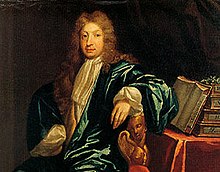
- John Dryden-Poet Laureate
Who was John Dryden?
Dryden, poet laureate, was born in Northamptonshire, Britain in the year 1630 and by his dint of talent and industry is regarded as dominating the literary life of Restoration England.Walter Scott called him Glorious John.
At age 14, Dryden was sent to Westminster School as King's Scholar.This school had been re founded by Elizabeth 1 and it was so that he was influenced heavily by all things royal and Anglicism.
After the execution of Charles 1 and the fall of monarchy, Dryden found favour with the Protectorate and got a job with one of the trusted men of Oliver Cromwell.It seems, our Poet Laureate had strong survival instincts! He worked with John Milton and after the death of Cromwell, wrote a eulogy,Heroic Stanzas.
Post the restoration of monarchy,quickly established himself as the leading poet and critic of the day and wrote a panegyric, Astraea Redux, celebrating the ascension of Charles 11 as the new king.
Dryden passed away in 1700, seven years before the demise of Aurangzeb.
When, Bernier, the doctor-traveller from University of Montpellier returned to Europe and published is travelogue of Mughal India, Dryden was much impressed and influenced from it.So, much so that, the poet wrote a drama on the tragedy of Aurangzeb.
But, my dear readers, who was Aurangzeb? He was the third youngest son of Shahjahan, the maker of Taj Mahal and Old Delhi-also known as Shahjahanabad. Shahjahan was one of the strongest Mughal emperors that India has seen.
It is indeed surprising that a poet so refined as Dryden should be writing about a coarse personality as Aurangzeb!The drama takes poetic licence and is often inaccurate in facts and circumstances.
The dramatis personae;
- Shahjahan (in love with Indamora)
- Indamora- a captive queen from Kashmir
- Aurangzeb- his younger son , in love with Indamora;the love is reciprocated from her!
- Murad- his elder son and son of Noormahal
- Noormahal- the Mughal Empress
- Arimant- Governor of Agra and in love with Indamora
- Oomrahs or Knights- Dianet, Asaf Khan, Suleyman Agha, Mir Baba etc
- Melsinda- wife of Murad.
- Zayda, favourite slave of the Empress
The drama depicts Aurangzeb as the loyal son of the Emperor and after defeating his three brothers, enters Agra and visits Shahjahan, who is 70 years old.The Emperor requests Aurangzeb to let go of Indamora but the latter refuses.The senile Emperor then invites Murad to the palace and gets Aurangzeb arrested.Agra was the Mughal capital then.
Noormahal, the mother of Murad, seduces Aurangzeb but the prisoner refuses the Empress' affections, a bowl of poison is then presented to him and just as Aurangzeb puts it to to his lips, in comes Murad ebters and snatches the cup away.
Later, the Emperor and Murad fall out of each other, the king reaches out to Aurangzeb who then defeats Murad.The vanquished prince dies of wounds and his wife, Melisinda decides to commit sati.
Noormahal goes crazy, she tries to stab Indamora but loses the plot and dies a broken person.Indamora is reunited with Aurangzeb, who then goes on to become the Emperor of Mughal India.
This is then the content of Dryden and most of it is factually incorrect.
Sati was a Hindu custom wherein a Hindu widow used to immolate herself upon the funeral pyre of her dead husband.The Mughals were Muslims and devout at that so there was no question of them following this Hindu custom.
Secondly and most importantly, Aurangzeb had killed Murad on his way to achieving his ambition and was never a loyal son of the Emperor.
There is no mention of Indamora either, in Bernier's records!
Lastly, Noormahal was the queen of Jehangir , the father of Shahjahan and not of the latter!
But, it is all poetic licence all the way for our Poet Laureate.
So impressed was the English King Charles 11, that he termed this drama as one of the best tragedies of Dryden!
Thursday, June 4, 2015
7 modern #boardgames that have links to the #past #History #India #Travel #Delhi #Heritage
Hauntingly beautiful;Delhi and India: Board Games Our Link To Our Past: Board Games-Our Links To Our Past Come summer vacation and the kids in our families pull out their board games an...
Monday, June 1, 2015
Hauntingly beautiful;Delhi and India: Tales Untold of Delhi, India, The Lord's Own Garden
Hauntingly beautiful;Delhi and India: Tales Untold of Delhi, India: The Magic of the Flute and Other Stories Tales of India, Untold ...
Hauntingly beautiful;Delhi and India: Tales Untold of Delhi, India, The Lord's Own Garden
Hauntingly beautiful;Delhi and India: Tales Untold of Delhi, India: The Magic of the Flute and Other Stories Tales of India, Untold ...
Hauntingly beautiful;Delhi and India: Tales Untold of Delhi, India
Hauntingly beautiful;Delhi and India: Tales Untold of Delhi, India: The Magic of the Flute and Other Stories Tales of India, Untold ...
Tales Untold of Delhi, India
The Magic of the Flute and Other Stories
Tales of India, Untold
What if I told you that just 110 miles from the capital of India, Delhi, is a garden that turns you into a tree if you stay back in it after dusk!
Horrified, no!
Welcome to Mathura, the city of the birthplace of Lord Krishna. He is the super hero of the world's largest epic, Mahabharata and also the author of Bhagwad Gita (Gospel of the Lord).
Millions of people the world over whether they are from the United States, Great Britain, Japan, South East Asia, continental Europe, the Middle East follow him, love him, dissect him and adore him as God, lover,philosopher or a statesman. Offcourse, his following in India knows no bounds.
Krishna was born in Mathura more than 6000 years ago on the banks of Yamuna, one of the most important rivers of the Indian subcontinent.His childhood was quite an eventful one as he had to battle the tyrant of the day, Kansa, to free his parents from their prison.
Even as a small child, his innocence attracted all and sundry to him- his flute being a magnet of sorts.
Enchanted by the lilting tunes from his flute, young maidens of his age and even older, used to sway in a manner that cannot be described in this blog. It was not a dance, it was not waltz, it was simply harmonising one's body and soul to the tunes emanating from the flute. These movements are called Raasa.
The flute is called a bansuri in North India and is made of bamboo.
So, what is this mystery about the garden that I mentioned earlier? This garden is located in Vrindavan, a quaint little place just 16 miles north of Mathura.

It is said in popular folklore that even in this day and age, there are certain days in an year when Lord Krishna along with the maidens , called gopis ,appears in the garden and then, begins a night long sequence of dances.
But, it is also said that if any outsider happens to watch this mystical dance, he/she turns into a stone or a tree! There is no conclusive proof behind this legend but it has stuck on for countless of centuries and the first thing that the travellers ask upon coming to Vrindavan is the location of this garden,
The trees that you see in the image are curious visitors ,actually-so the legend says.
The word, Vrindavan is composed of two parts- Vrinda, meaning Tulsi or Basil and Van or Forest.
Perhaps, Vrindavan in the ancient times was densely populated by basil shrubs. Basil or Tulsi in India is considered to be auspicious and spiritual in significance and almost every Indian household has a Tulsi shrub planted within it.
The name of the garden is Nidhi Van.
Why do you think this legend persists? Please write back to me.
Tomorrow's post- The City of the Djinns
Sunday, May 31, 2015
Hauntingly beautiful;Delhi and India: Hauntings- Echoes in Hindi Movies
Hauntingly beautiful;Delhi and India: Hauntings- Echoes in Hindi Movies: Over few days, my friends here, would be wondering why this fixation ...
Hauntings- Echoes in Hindi Movies
Hauntings-Echoes in Hindi Movies
Over the past few days, my friends here, would be wondering why this fixation with the word "haunting"?
 |
| Stepwells are haunted-they say |
I have no answers to it as to why I am so chained up to all things of the past and cherishing or romanticising the past.It is a natural past of me and will probably go up in smoke once I finish my journey on the earth.
But, I enjoy this streak of mine and suffer no guilt pangs about it.
I guess, us Indians are largely not enamoured of their past.For the millions of us, the daily challenge of keeping up the momentum of our lives overcomes the luxury of brooding over the past.
On the contrary, people from the West take great interest in most things linked to ghosts,hauntings and other weird phenomena.I get a lot of readership from such people living in the US, UK and othe western countries.
Reflections in the Hindi Cinema
Several years ago, in the early fifties, the subject of "haunting" was well captured in a Hindi movie "Mahal"The movie, that went on to become a blockbuster, did not dwell upon the subject of ghosts per se, but. drew heavily on the haunting lyrics and music of the lead number.This song was excellently rendered by Lata Mangeshkar. The lyrics went as; Aye Ga, Aye Ga , Aye Ga Aaney Wala!Translated into Hindi, it means, "The one I am pining for will come one day!"
https://www.youtube.com/watch?v=PceIRa17vwI
The lead female protagonist was Madhubala, that great ethereal beauty who sprung a million desires in the hearts of the average Hindi cinema goer, recovering from the miseries and angst of Partition of India. Mahal was produced in the year 1949.
What made this movie so much an ethereally haunting film?
First, the screenplay that captured the elusive character of the heroine so subtly.One moment, she is here, the next moment she is gone-vanished!
Two, the bewildered and harried role that Ashok Kumar played - his arched eyebrows effectively conveyed his sense of bewilderment and at times.horror on seeing images in the least unexpected places and at unexpected times.
And three, of course, the timeless music composed by Ghulam Mohammed and the great lyrics of the song.Was it Shakeel Badayuni?
Since, then, there have been a slew of movies on ghosts and hauntings in the Hindi cinema like Bees Saal Bad and Madhumati.I have yet to see these two epochal movies.
Touching upon this subject, again, in the early eighties-I think it was 1980, there was this greatly successful movie, Jalmahal starring Jeetendra-often called Jumping Jack - and Rekha.
The movie set in the ancient palace of Amer, Jaipur was a modern day adaptation of Mahal, except that this time the music composer was RD Burman. Oh man, what a great composition it was the song- Main Hoon Diya, Sooni Raat Ka.(I am the lamp that glows in a forlorn night!).
The combination of the haunting song with images of the abandoned fort lent an element of authenticity to the entire story, which otherwise was about afterlife!
https://www.youtube.com/watch?v=UYh19dgVokM
Finding Inspiration from abandoned historical sites
Scattered throughout India are some very well known places,forts and palaces that convey that sense of eeriness and foreboding.These sites have become a part of the Hindi movie stories.
Take the case of Bhangarh fort in Alwar, India or the Garh Kundar near Orchha, Jhansi.At Kundar, a bloody battle between two warring Rajput clans led to the annihilation of one of them in one single night!Today, not even the pigeons make the castle their homes.
Bhangarh, a few hundred kilometres from Delhi is reputed to be a cursed fort where one finds unsettling to enter even during the daytimes.
And, of course, right in the middle of Delhi, you have an ancient fort that is inhabited by djinns or ghosts and are revered by the believers.
More on the haunting side of India and Delhi in the days to come.
Stay tuned!
Saturday, May 30, 2015
Hauntingly beautiful;Delhi and India: The Mowgli Story
Hauntingly beautiful;Delhi and India: The Mowgli Story: Was there a Mowgli at all? We all have grown up listening to and reading Rudyard Kipling's tales o...
Friday, May 29, 2015
Hauntingly beautiful;Delhi and India: The Hauntingly Beautiful Stepwells of Delhi
Hauntingly beautiful;Delhi and India: The Hauntingly Beautiful Stepwells of Delhi: The Water Cafes of Ancient Delhi Delhi has had a unique distinction of hosting a wide variety of architecture down the ...
The Hauntingly Beautiful Stepwells of Delhi
The Water Cafes of Ancient Delhi
Delhi has had a unique distinction of hosting a wide variety of architecture down the ages.Be it Jain,Buddhist, Turk, Moghul or British, Delhi is like a mother hen-under her loving gaze and protection thrive all kinds of architecture styles.
How many of us know that Delhi has had more than 300 baolis or water cafes.
A baoli is a stepwell, the steps used to lead to a pool of water-the water of which was drawn from an adjacent well or through aquifers within the subterranean soil and rock.Baolis also were a place were the lay people could congregate and exchange notes-hence the term "water cafe"
The earliest step well in Delhi and probabbly the whole of Northern India is the Anangtal, located in the northern part of Mehrauli.
It is said that the queens pf Raja Anangpal Tomar used to give away alms at this place to the poor at the insistence of the king.
Some people say that ghosts are said to live around these stepwells but of course, all this is hearsay.
The Tomars gave way to the Chauhans , who in turn yielded to the Mamluks or the "Slave Dynasty".
The Gandhak ki Baoli is adduced to this period of late 12th century and much of its construction is similar to Anangpal ki Baoli.Gandhak means sulfur and it is believed that the waters of this baoli had sulfurous content and hence healthy.However, as you can see, this place needs renovation.
The architecture of the baolis underwent a major change in the 16th century when a Lodi dynasty noble, Daulat Khan Lodi constructed the Rajon ki Baoli.Supposedly, this stepwell was meant for the convenience of the masons of that time.Notice the arches of this stepwell-they are a bit conical and taper toward the top.
Another interesting baoli of the 16th century is found in the Central Delhi area-Agarsen Ki Baoli.Legend has it that this stepwell was constructed during the Mahabharat era i.e. more than 5000 years ago.However,the trader community of India restored this building only a few hundred years ago and borrowed significantly from the contemporary architectural style.
Agarsen ki Baoli is quite popular among the Hindi movie industry and quite a few creative visualizations have been shot here.Thanks to this,this place has started attracting the young traveller crowd which is good for the India's heritage conservation efforts.For the not so well informed, Agarsen refers to an ancient king of Mathura who was later imprisoned by his son in law who also wanted to be the king.
In the late 14th century or so, a Sultan, Feoze Shah Tughlaq dug up another baoli.This stepwell is located within the Feroze Shah Kotla which is a citadel on one of the prominent roads of Delhi.Circular in nature, this baoli is in a very bad shape and has been locked up by the authorities.
Another interesting baoli can be visited in the Red Fort at Delhi.It is said that this baoli was constructed by the Tughlaq dynasty-which preceded the maker of Red Fort by a good 300 years.Probably the source of the water is the river Yamuna, whch used to flow quite nearby.
The images of the baolis are from the most ancient to the most recent in description.
 |
| Red Fort Baoli |
 |
| Firoz Shah Baoli |
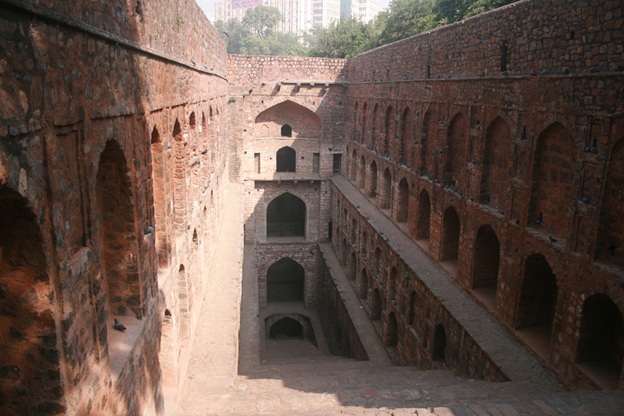 |
| Agrasen Ki Baoli |
 |
| Rajon Ki Baoli |
| Anangtal |
 |
| Gandhak Ki Baoli |
Haunting Stories;Delhi and India: The King and the Ambassador-Taunts,Insults and Bar...
Haunting Stories;Delhi and India: The King and the Ambassador-Taunts,Insults and Bar...: The Mughal and the Persian- barbs back and forth! India, for much of the 13th-18th century period was under the Slaves, Turks,...
The King and the Ambassador-Taunts,Insults and Barbs
The Mughal and the Persian- barbs back and forth!
India, for much of the 13th-18th century period was under the Slaves, Turks,Afghans and later on,the celebrated Mughals.
In 1526, Babur, a a descendant of Ghenghis Khan and Tamerlame or Timur, descended upon the Indian plains from his perch in Central Asia and fought a pitched battle with Ibrahim Lodi, the then king of Delhi at Panipat, India. Lodi was an Afghan king.
Panipat is located a few hundred kilometres from Delhi and has seen at least 3 major battles for the Delhi throne.Close to Panipat is located Kurukshetra, the site of the Great War or Mahabharat.
The Great War was fought amongst the two warring sets of cousins, the Pandavas and the Kauravas.
For some reason, this area is haunted and armies have fought among themselves, murdering in thousands, for that throne of Delhi.
So, after worsting Lodi and later killing him, Babur marched to Delhi and the unfaithful bride that Delhi is, wed him as her lord.
Babur was the founder of the Mughal empire in India and his descendants were Humayun, Akbar,Jehangir and later Shahjehan.
We will talk about Shahjehan, the king who is credited with building Taj Mahal in Agra though there are several controversies about this claim. He laso built the Delhi Red Fort and the old Delhi city.
While the Moghuls were cementing their kingdom in India, the Persians or the Iranians were watching the Mughal's moves were great interest.Afghanistan was their area of interest and quite a number of times the two dynasties conflicted over the control of the Afghans.The bitterness was all evident.
The Persian ambassador to the Moghul court carried this bitterness and the attendant sense of superiority in his heart.After all, the Persians considered themselves to be of a more royal blood and carrying the strains of the ancient kings like Darius, Xerxes and Cyrus!
The Mughals considered matrimonial relations with the Persians a matter of honor and racially uplifting.Many princes had Persian wives and it was considered de rigor off springs of these ladies would later become the king of India.
The Mughal king, Shahjehan, on the other hand treated the ambassador with disdain and was determined to show the envoy his place in the court!
One day, the Mughal plotted to inflict embarrassment on the envoy by having a canopy erected in such a manner that the latter had to bow his head while entering the court of the Mughal. No way, the envoy said to himself and proceeded to enter the room with his back turned toward the king!
Shahjehan was incensed..O fool, he thundered, are you an ass that you are entering this august assembly in this manner?The ambassador answered coolly, O King, in our country, we enter the asses' stables in this manner only!The entire assembly was stunned but the king could not do anything.Persia was much much militarily stronger than the Mughal empire.
The insults and barbs continued.
After Shahjehan completed the construction of Shajehanabad-now known as Old Delhi- he invited the envoy for a tour of the city and asked for his opinion.
After travelling together for a few miles in the Delhi streets and a boat ride together in the Yamuna, the king requested the envoy for his opinion.
The ambassador, without batting an eyelid remarked-O King, while Delhi is like a moon on the fourteenth night, my capital is like a new moon night!The king was mightily pleased with this remark.
But, a few discerning courtiers saw through this remark.The ambassador was really hinting that the Mughal empire was actually disintegrating while the Persian empire was still in its infancy and on path to glory!
The Mughal-Persian relations were not that pleasant during this phase of the Mughal rule.
There are other instances of the unpleasant exchange of barbs between the two personalities, but for brevity, I shall stop here.
Thursday, May 28, 2015
Haunting Stories;Delhi and India: Triumph of Spirit-Our own Blade Runner
Haunting Stories;Delhi and India: Triumph of Spirit-Our own Blade Runner: Today morning, when I opened my inbox, I saw a notification sticking out. I have got mail, I chuckled to myself. Not surprising beca...
Wednesday, May 27, 2015
Haunting Stories;Delhi and India: Triumph of Spirit-Our own Blade Runner
Haunting Stories;Delhi and India: Triumph of Spirit-Our own Blade Runner: Today morning, when I opened my inbox, I saw a notification sticking out. I have got mail, I chuckled to myself. Not surprising beca...
Triumph of Spirit-Our own Blade Runner
Today morning, when I opened my inbox, I saw a notification sticking out.
I have got mail, I chuckled to myself.
Not surprising because one gets scores of messages every day in your Gmail or Yahoo account.
But, this one was special- someone had responded to one of my latest blog posts and this someone is one who greatly admire. He is probably reading this post so shall be chuckling ear to ear.
Why do I admire Mr X?
Years ago, while I was growing up and studying in School, Mr X was one of the fittest guys around. And also a happy soul. He was good at studies and every one thought he would join an engineering course. You see, every one is marked by every other boy or girl in the class , career wise.
Boards came. We wrote our tests. And then we all entered our own Colleges for Life.
We all went our own ways, struggling with our jobs and careers, married and begot children and started our own families.
The year was 2008 when I visited Lucknow , my own city, for a short break. Luckily, I had the number of X which I had got from another school friend of mine.
I found X the same cheerful man I had known during school days. The same happy disposition and the same warm smile that reached the corners of his eyes.
He had turned a tutor and a very successful one at that. We shared our pleasant memories and then I left.
Back in Delhi, over a nice snack and some really nice tea, I shared this meeting with another friend of mine.
"Do you know", he wheezed," what happened to X?" "No", I intoned.
Well, he suffered from muscular dystrophy soon after the Board exams, my Delhi friend carried on. And this disease put paid to his becoming a career Army officer. But, too proud to share with the world his tragedy, X fought back and made his passion his career. He became a successful tutor.
I have a name for our X here- Our Very Own Blade Runner!
Haunting Stories;Delhi and India: Tales of The Hunt;Mughals on the rampage
Haunting Stories;Delhi and India: Tales of The Hunt;Mughals on the rampage: Tales of The Lion Hunt-Mughals on the rampage For the readers of my blog, my latest offering- the art and science of lion hunts i...
Tales of The Hunt;Mughals on the rampage
Tales of The Lion Hunt-Mughals on the rampage
For the readers of my blog, my latest offering- the art and science of lion hunts in India...read on...
The Indian lion is featured in the state emblem of India. Majestic in size and poise, the animal once roamed large tracts of India.
Today, the actual numbers are just a ghost of the their former size of numbers.The western state of Gujarat, India is today the only reserve of this animal which competes , in every department, with its near cousin, the Bengal tiger.
For nearly 200 years, India was ruled by the Mughals who owed their lineage to Ghenghis Khan and Tamerlame.
Ghenghis is considered one of the foremost emperors of the world-his empire ranging from China in the east to the Russian plains in the west. Tamer Lame was distinguished by his murderous mobs who brought death and deprivation to every country they visited.
Needless to say, this thirst for blood manifested in their descendants, the Mughals who ruled India from Delhi and Agra for a long period of time.
In my last blogpost, I have written about their blood thirsty ways to attain power, how an aspiring king did away his brothers in his quest for power.
Now, when these guys were not fighting amongst themselves, they were hunting the wild animals.This hunt was called shikar.

It was quite an elaborate effort to hunt down these beasts-particularly the lions.
The men in the shikar party used to tie up an ass or a donkey near the cave of the lion .The animal seeing a hapless dinner available to it did not let the opportunity pass.After the dinner, it used to go to the nearest lake or a river, quench its thirst and come back to its cave.
The next day- one more free meal for the lion.Again, the lucky beast quenched its thirst and go back to its siesta.
But, there was a catch, the donkey was fed with opium, like hashish,to invade the systems of its diner.
The lion, now sufficiently overcome with laziness was too weak to even spot the lurking danger in the form of the Mughal emperor hidden on a wooden platform near its cave.
Out came the spears and bows and arrows and the lion was massacred in cold blood.
Seems heroic? No. But, this kind of hunts , over the years, robbed India of her wildlife and today, the kingdom of the lion is restricted to just a colony in an Indian state.
Monday, May 25, 2015
Haunting Stories;Delhi and India: The Mysterious Affairs of Salimgarh
Haunting Stories;Delhi and India: The Mysterious Affairs of Salimgarh: Brace up son,the assassins have arrived! Delhi, often called as the unfaithful bride of India, has a multitude of secr...
The Mysterious Affairs of Salimgarh
Brace up son,the assassins have arrived!
Delhi, often called as the unfaithful bride of India, has had a multitude of secrets tucked away in her bosom.
The colourful and morbid past of the city draws visitors to the city in droves, some come here to soak in the modernity of this ancient town and the rest head to Delhi to explore and relive its ancient and ghostly past.
Delhi as a city never ceases to enchant me.William Dalrymple has called it City of Djinns.
Djinns are ghosts by another name.
As you enter the gates of Red Fort of Delhi, you cannot but fail to appreciate the vastness of the fort and its walls.The Red Fort was built by Shah Jehan, the famous Mughal who also built the worl renowned Taj Mahal in Agra, India.
Most of the travellers are ignorant of another fort, Salimgarh,located just north of the Fort.A narrow bridge connects the Red Fort and Salimgarh.
 |
| Salimgarh- pic courtesy from the web |
300 years back, Salimgarh was the imperial dungeon, meaning the royal prison.
Disobedient princes and princesses were thrown into the prison and at times, executed.
The affair of Dara and Aurangzeb
The year was 1659 and the sons of Shahjehan were embroiled ina deathly contest for the crown of the Mughal empire in India.
The King had 4 sons; Dara, Murad,Aurangzeb and Shuja. Aurangzeb had disposed off Murad and Shuja was on a run from Bengal to the borders of Myanmar (earlier Burma) .The only prince that was left apart from Aurangzeb was Dara and after a long chase, the latter was captured by Aurangzeb and was put in the Salimgarh dungeon.
Dara had for company his minor son, Sipar Shukoh in the prison. The prince was quite popular among the citizens of Delhi and unlike many of the Muslims of that era was quite liberal in his approach toward life and polity.But, he was a stupid and haughty guy.He did not take kindly to the advice offered by his friends whom he treated with contempt.
In the famous Battle of Samugarh near Agra, India, though Dara had an army of around 400,000, against Aurangzeb's 35-40,000, he could not hold on to the ground and ultimately lost the battle.
Aurangzeb was too clever to be a direct instrument for Dara's execution.He wanted a handyman and he found one.
Years ago, Dara had offended a small time official called Nazir.That offence was rankling Nazir for sometime and Aurangzeb finally used that grudge.He sent Nazir to assassinate his brother.
One night ,after Dara and his young son had had their dinner, he heard a small commotion at the prison doors.
Sensing his end was near, the unfortunate prince grabbed his son to his bosom not intending to let the child be taken away.But, the brutes were many and they wrung away the wailing child to an adjoining room.
There was a brief struggle. Dara was a strong man and he had commanded armies during his hey days and he could not be so easily subdued.The attackers were determined, blinded with the hate and the lure of lucre.They pinned the unfortunate prince to the ground , Nazir fished out a shimmering blade and the prince was done away to death.
Salimgarh has been witness to several such incidents.Locals say that the fort is haunted by unhappy and dissatisfied souls- one of whose also happens to be that Aurangzeb's daughter!
Haunting Stories;Delhi and India: Tiger Tales- The Jungle, Mowgli and Mohan
Haunting Stories;Delhi and India: Tiger Tales- The Jungle, Mowgli and Mohan: I live in Delhi, one of the ancient cities of not just India but of the rest of the world as well so, a lot of my posts reflect his...
TheGhostFromDelhi: Tiger Tales- The Jungle, Mowgli and Mohan
TheGhostFromDelhi: Tiger Tales- The Jungle, Mowgli and Mohan: I live in Delhi, one of the ancient cities of not just India but of the rest of the world as well so, a lot of my posts reflect his...
Sunday, May 24, 2015
TheGhostFromDelhi: Tiger Tales- The Jungle, Mowgli and Mohan
TheGhostFromDelhi: Tiger Tales- The Jungle, Mowgli and Mohan: I live in Delhi, one of the ancient cities of not just India but of the rest of the world as well so, a lot of my posts reflect his...
: Piku- Irrfan steals the show
TheGhostFromDelhi: TheGhostFromDelhi: Piku- Irrfan steals the show in...: TheGhostFromDelhi: Piku- Irrfan steals the show in this Indian movie : Piku is all about Irrfan I am co...
Was there a real Mowgli?
TheGhostFromDelhi: The Mowgli Story: Was there a Mowgli at all? We all have grown up listening to and reading Rudyard Kipling's tales o...
The Mowgli Story
Was there a Mowgli at all?
We all have grown up listening to and reading Rudyard Kipling's tales of Mowgli, the jungle boy reared by the wolves.Mowgli lived somewhere in the forests of India, apparently and many of the characters of Kipling's work have Indian names- Baloo, Sher Khan etc.
This is a continuation of my earlier post on India's wildlife , her jungles and the fantastic tales of her wildlife.
Was there a real Mowgli?
Years ago, while working with a newspaper in Kanpur, India, I read a fantastic account of Mowgli and his tales.
During the British Raj, when India was Britain's colony, hunts of Indian wild animals were a common affair- it is estimated that the British officers and the Indian Rajas together gunned down more than 100, 000 tigers!
Today, there are no more than 3000 tigers in Indian jungles, alas!
Britain, through East India Company had colonised India in the 18th century
During one such hunt, the hunters , in a remote Indian jungle, stumbled upon a pack of wild dogs.
Wild dogs are some of the most tenacious hunters in the jungle and can even fell full grown adult tiger!
The hunters were however not much prepared for an even more astonishing sight- crouched amongst the pack was a small boy, a human boy, that gave out sounds like a feline- whistling, roaring and even gnashing his teeth.
After a small chase, the hunters managed to separate the small boy from the pack and carried him back to their camp.
They then tried to speak with him in a language spoken locally hoping the boy would respond but, he exhibited no signs of comprehension, let alone answering back to the assembled men.
Confounded and disappointed, the men then decided to refer the boy to a doctor.Obviously, the doctor too could not get to the root of the problem.
Ultimately, the local police decided to put the small boy in a sanatorium in Agra for psychiatric treatment.This sanatorium was located in Sikandra, Agra and was just in front of the tomb of Akbar, the Moghul emperor.
The mentally disjointed boy could not cope up with his new surroundings and passed away sometime in the late 19th century.
What we read in the Junglebook today has largely been inspired by this story.Except that there are no wolves in India.
A fantastic tale, is'nt it?
Subscribe to:
Comments (Atom)